Building a Möbius-Inspired Pavilion with 70% Recycled Steel
2 min read
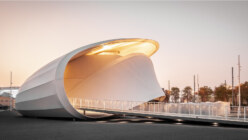
The Luxembourg Pavilion at Expo 2020 Dubai is not only a striking architectural gesture but also a demonstration of circular design principles and sustainable construction. One of the main requirements of the expo was that 70% of the materials used had to be recycled. This directive informed the choice of steel as the pavilion’s primary material, offering both structural versatility and the potential for reuse.
Steel was essential not only for sustainability but also for the pavilion’s complex Möbius strip geometry. Its twisted, continuous form could only be realised with steel, making it the only viable option. Initially, the pavilion was designed to be dismantled and shipped back to Luxembourg, reinforcing the practical need for prefabricated, durable, and reusable components. Although local authorities in Dubai later decided to retain the pavilion permanently, this decision highlights the quality and resilience of the materials, while also emphasising the need for ongoing maintenance in a different climatic context.
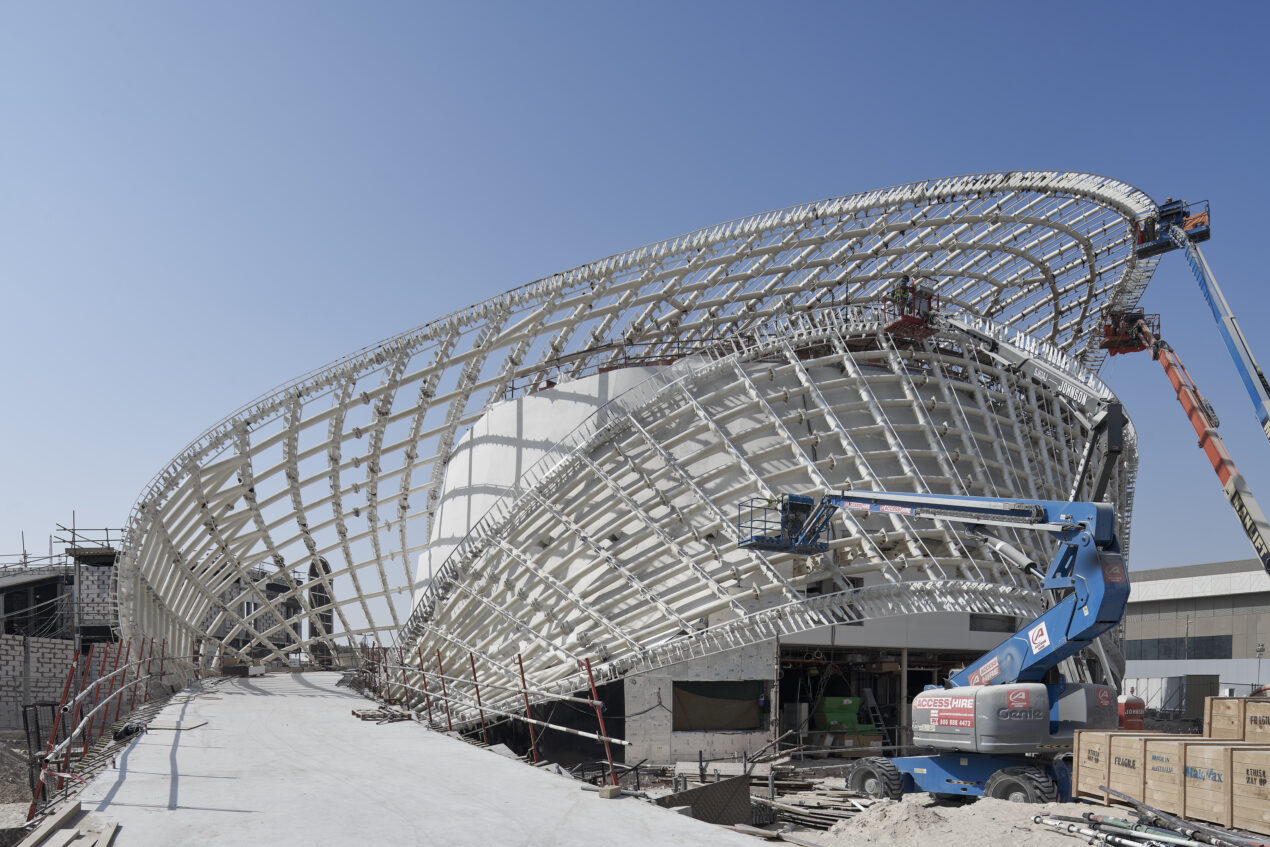
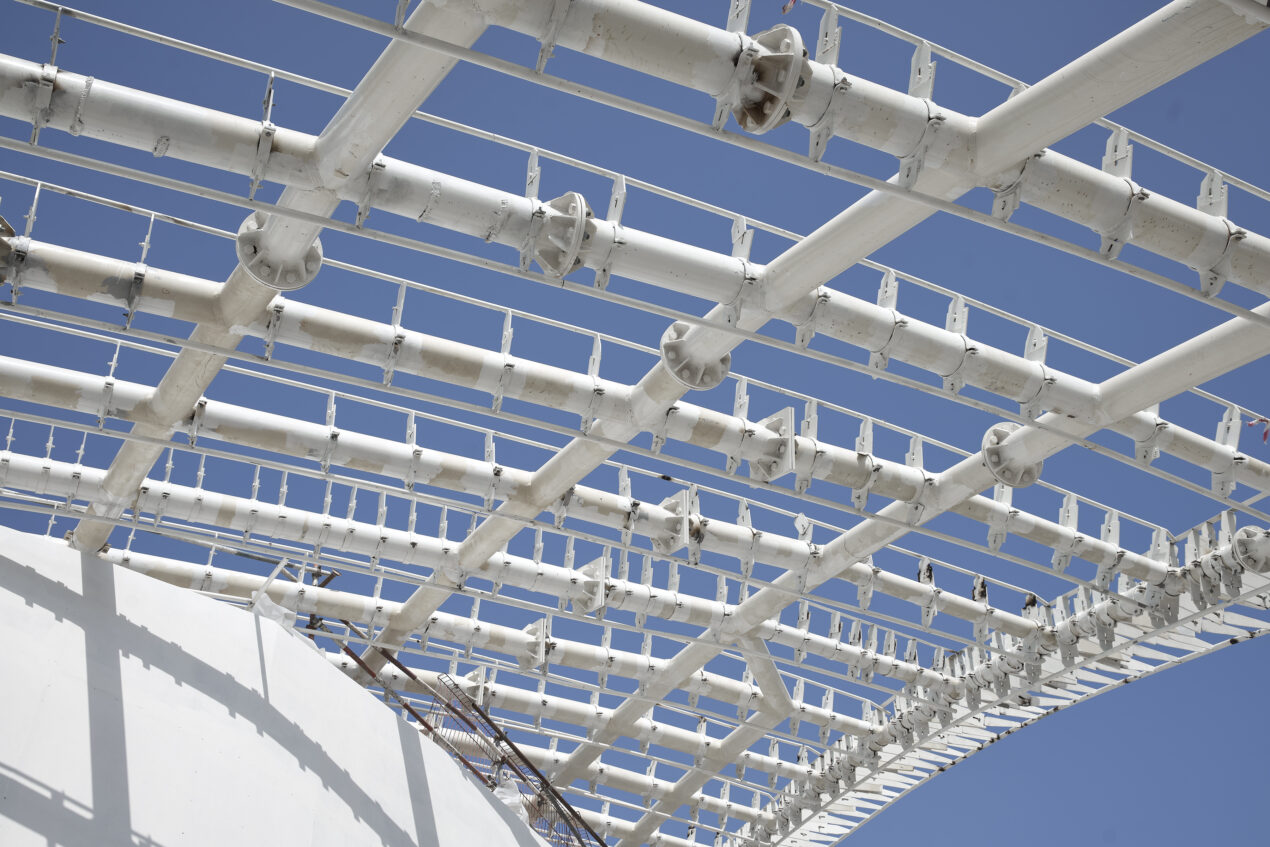
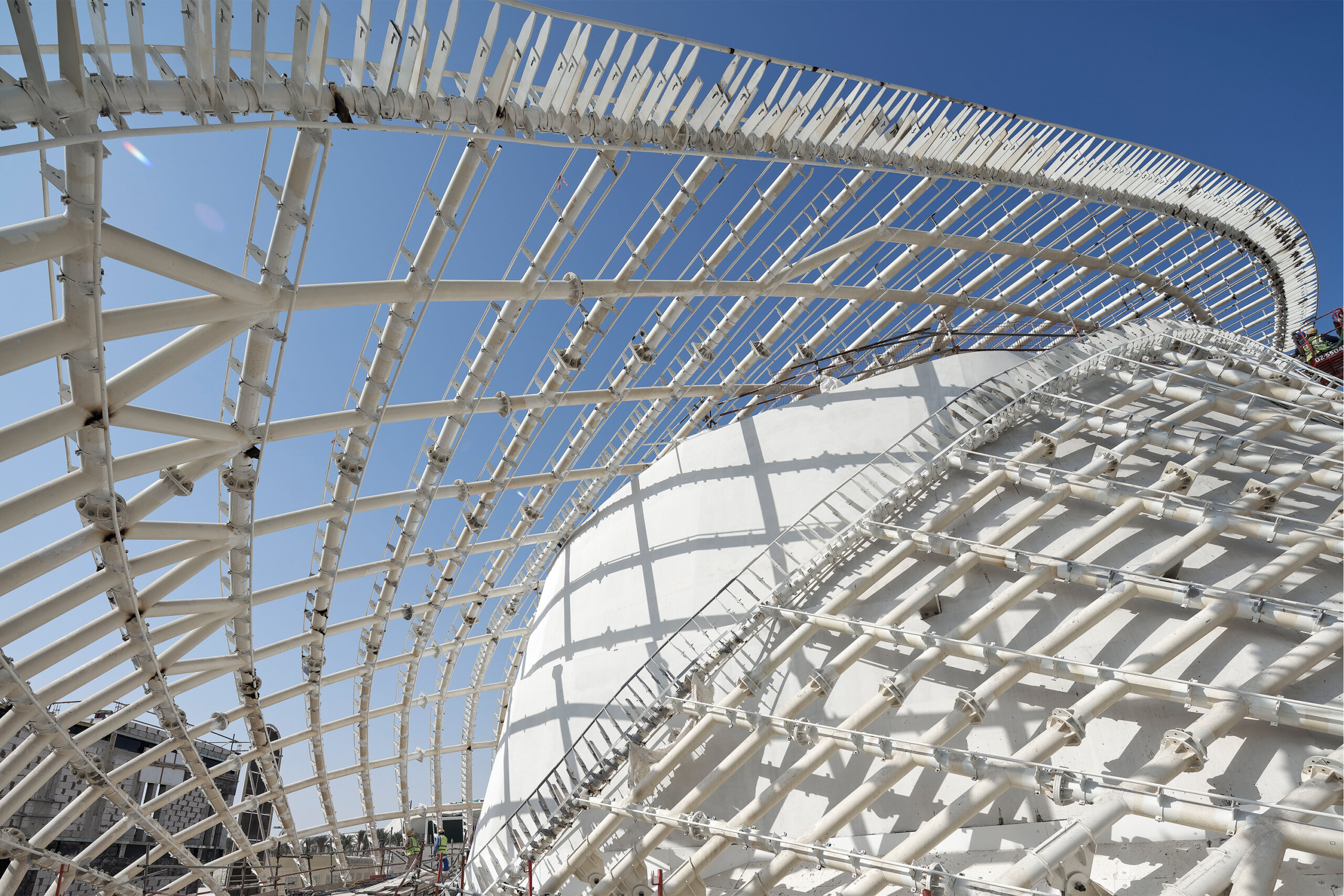
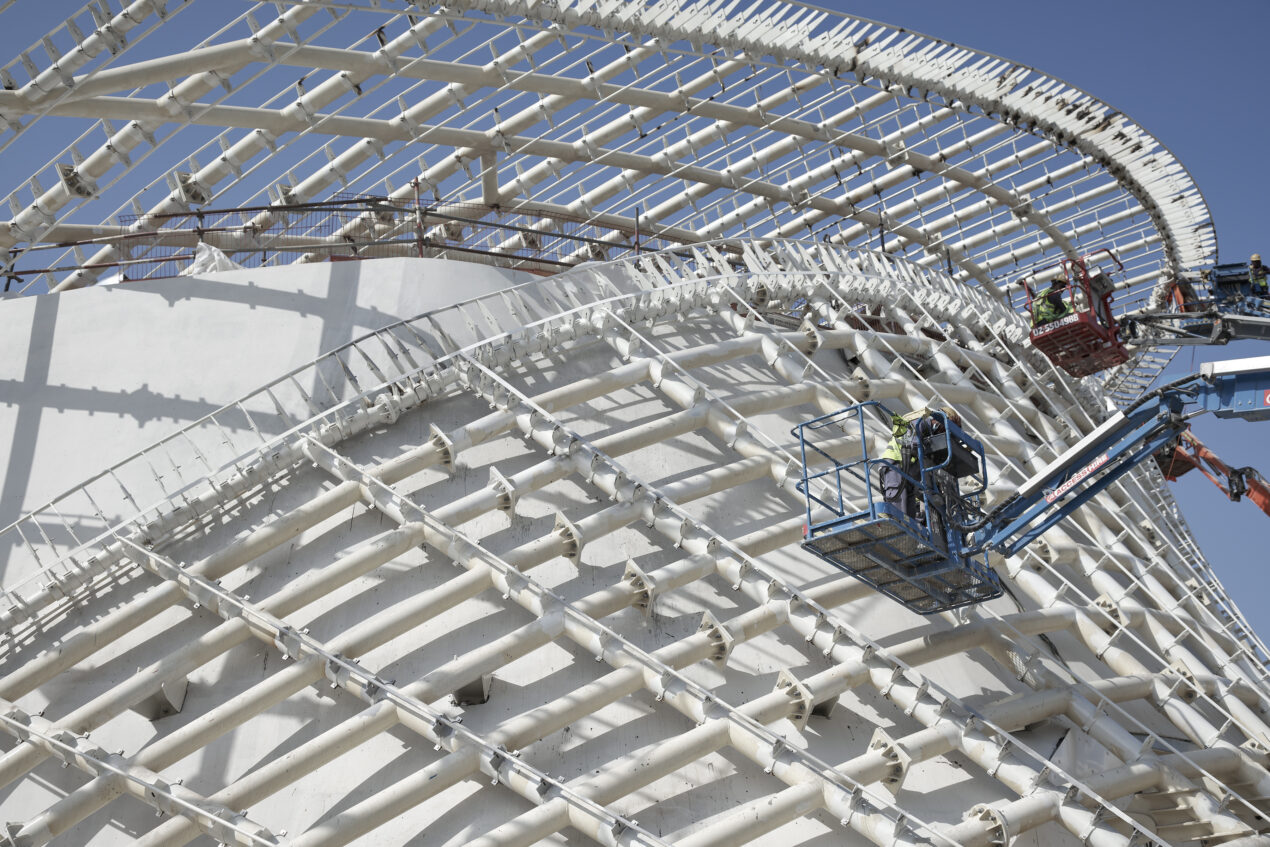
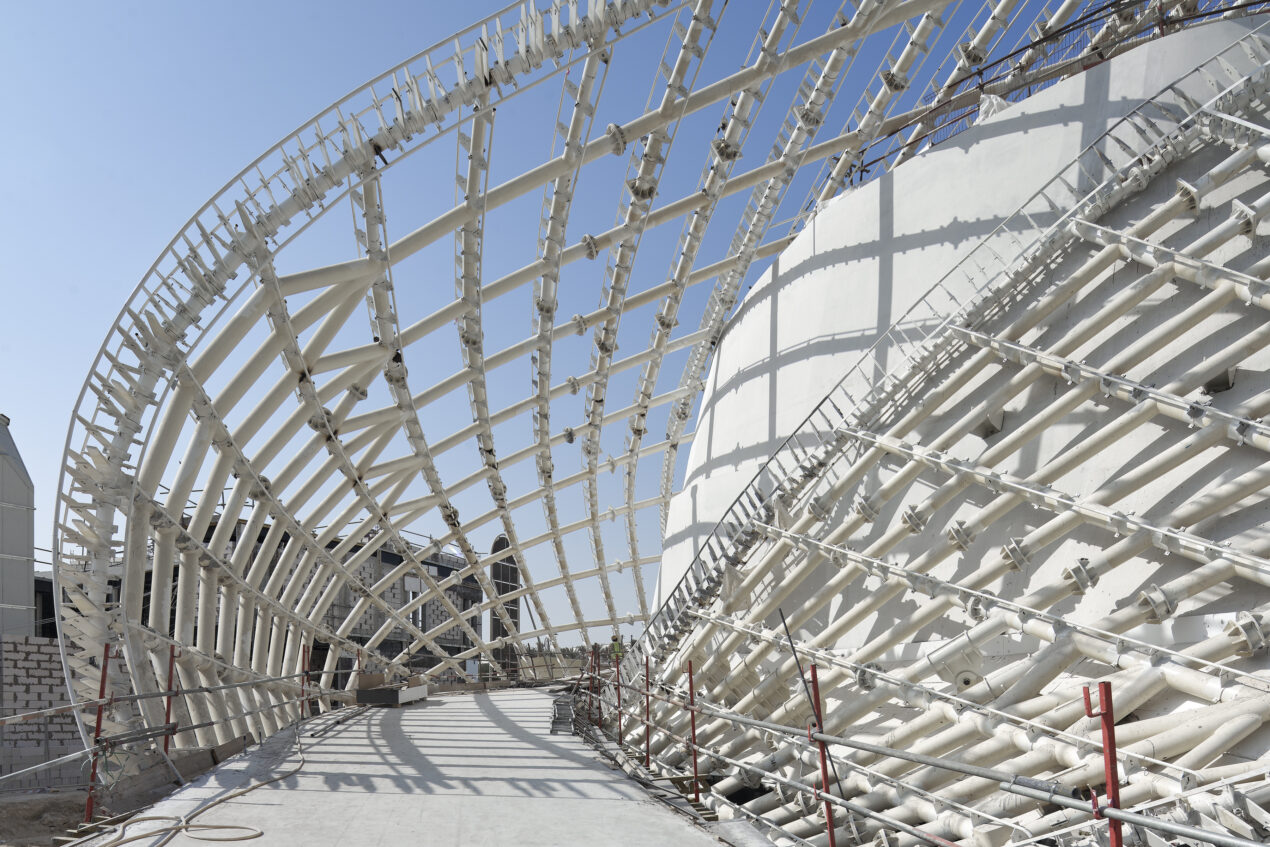
The pavilion’s steel structure comprises around 500 tonnes of material, optimised for different functions: steel pipes form the Möbius shell, H-beams provide structural support, and specially shaped nuts connect the individual elements. Prefabricated in Luxembourg by ArcelorMittal, the components were meticulously coordinated to accommodate the precise PTFE membrane, which could not be stretched, ensuring a flawless fit for the pavilion’s curved surfaces.
Another technical challenge was integrating the exhibition spaces along the sloped ramp. The pavilion features a double-curved system with a fire protection layer, requiring parallel walls to support exhibition furniture, including an 80-metre-long piece prefabricated in Germany and transported to Dubai in one piece. The combination of precise engineering, prefabrication, and sustainable material selection demonstrates how complex architectural ambitions can align with environmental responsibility.
Ultimately, the Luxembourg Pavilion showcases how circular economy principles can inform high-profile international architecture. By reusing steel and designing for longevity, it provides a model for sustainable, adaptable, and resilient construction that honours both the environment and the ambition of the host nation.
Photography © Phil Handforth